



Losing a family member in a nursing home is devastating. When that loss happens because of a preventable error during a routine procedure, a family’s grief often becomes mixed with anger and confusion.
You deserve answers about what happened, and in 2026, the law gives you legal options to hold the facility accountable. Our Peoria, Illinois nursing home wrongful death lawyers are here to help.
What Procedures in Nursing Homes Can Lead to Fatal Complications?
Nursing home residents often require medical procedures as part of their daily care. Many of these procedures are routine when they are done correctly. But when nursing homes don’t follow safety standards, even simple procedures can turn deadly.
Intubation and Airway Management
Intubation involves inserting a tube into the airway to help a patient breathe. This procedure requires skill and technique. When done incorrectly, the tube can enter the esophagus instead of the trachea, cutting off oxygen. Staff may also cause trauma to the throat or airway. Residents with breathing emergencies can suffer fatal brain damage within minutes if intubation goes wrong.
Injections and Medication Administration
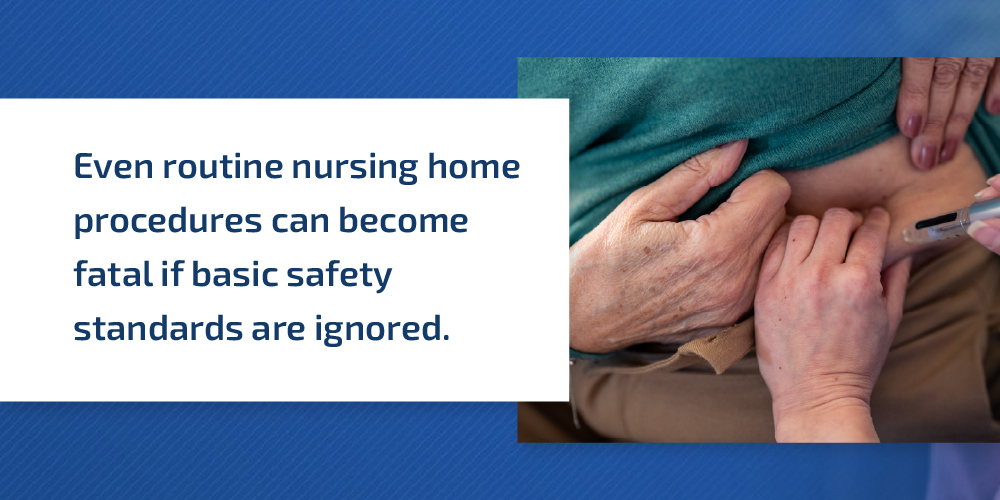
Injections seem straightforward, but errors happen frequently in nursing homes. Staff members may:
- Inject the wrong medication
- Give an incorrect dosage
- Give drugs to the wrong patient.
What’s more, air embolisms can occur if syringes are not prepared properly. Injecting into the wrong site or at the wrong angle can cause nerve damage, infections, or dangerous drug interactions.
Catheterization
Urinary catheters are common in nursing homes, but careless insertion or care can lead to serious infections. Catheter-associated urinary tract infections can spread to the bloodstream, causing sepsis. According to the Centers for Disease Control and Prevention, catheter-associated urinary tract infections account for about 75 percent of all urinary tract infections in healthcare facilities. For frail elderly residents, sepsis is often fatal.
Feeding Tube Procedures
Many nursing home residents rely on feeding tubes for nutrition. Inserting these tubes incorrectly can puncture internal organs or place the tube in the lungs instead of the stomach. When staff members don’t verify tube placement before feeding, residents can aspirate liquid nutrition into their lungs, causing pneumonia or respiratory failure.
How Do Fatal Procedural Errors Happen in Nursing Homes?
Most fatal procedural errors trace back to systemic problems within the nursing home itself.
Understaffing and Overworked Employees
Unfortunately, some nursing homes operate with too few staff members caring for too many residents. When nurses and aides are overwhelmed, they rush through procedures. They skip safety checks. They make mistakes they would not make if they had adequate time and support.
Inadequate Training
Not all nursing home employees get proper training on medical procedures. Some facilities cut corners by having undertrained staff do procedures they aren’t qualified to do. A procedure that a registered nurse could do safely might become dangerous in someone else’s hands.
Poor Supervision and Communication
The consequences of even the most simple mistakes multiply when facilities don’t have oversight systems. For example, staff members may not tell each other if a resident’s condition changes. Supervisors may not review whether procedures are being done correctly. As a result, warning signs get missed because no one is paying close enough attention.
Can Families Sue When a Loved One Dies from a Nursing Home Procedure?
Illinois law provides legal options for families who lose loved ones due to nursing home negligence. When a resident dies because of improperly performed procedures, surviving family members may pursue claims under multiple laws.
The Illinois Nursing Home Care Act creates a specific right to sue nursing homes that violate residents’ rights or fail to provide adequate care. This law allows families to recover compensation and also provides for attorney fees in successful cases.
Additionally, the Illinois Wrongful Death Act allows surviving family members to bring claims when negligence is the cause of death. Spouses, children, and parents can seek compensation for their losses.
To succeed in these cases, families generally must prove that:
- The nursing home owed a duty of care to the resident
- The facility breached that duty
- The breach caused the resident’s death
- The family suffered damages as a result
What Should You Do If Your Parent Died a Suspicious Death in a Nursing Home?
The period after losing a family member is difficult, but taking certain steps can help protect your legal rights.
Get Records Right Away
Ask for copies of your loved one’s complete medical records from the facility. Illinois law requires nursing homes to provide these records to authorized family members.
Write Down What You Remember
Document everything you remember about your loved one’s condition before and after the procedure. Write down the names of staff members involved in their care. If possible, get contact information for witnesses.
Report to the Illinois Department of Public Health
Report your concerns to the Illinois Department of Public Health, which investigates nursing home complaints. However, understand that a government investigation is separate from your right to pursue a civil lawsuit. An investigation may take months or years, and its findings may not lead to justice.
Call a Peoria, IL Nursing Home Injury Attorney Today
Losing a loved one to a preventable error during what should have been a routine procedure is a tragedy that no family should endure. If this happened to your family, you have every right to demand accountability.
Our Peoria County nursing home injury lawyers at Nursing Home Injury Center have seen what families go through after these losses. We understand your grief, and we know how to investigate what really happened to your loved one.
We offer free consultations to help you understand whether you have a case. Call Nursing Home Injury Center at 309-524-6900 to speak with someone who will listen and explain your options.
