


FoodSafety.gov estimates that 3,000 people die of foodborne illness every year, with adults aged 65 and older named as a high-risk population. In a nursing home, you would assume that the staff would take care to avoid food poisoning in elderly residents. Unfortunately, this isn’t always the case. Nursing home residents can die of food poisoning when staff don’t take preventative measures or fail to address the illness in time. If your loved one has suffered illness or death as a result of food poisoning at a nursing home, reach out to a Peoria, IL nursing home neglect attorney.
At Nursing Home Injury Center, we can investigate incidents of food poisoning at long-term care facilities. As a small division of a larger firm, you will benefit from our wealth of resources while still receiving individualized service from our attorneys.
Older People Are at Greater Risk of Food Poisoning
Anyone can suffer from food poisoning. But older adults often get sicker faster, and they can have a harder time bouncing back. Many nursing home residents have weaker immune systems, so their bodies may not fight germs as well as they used to. Some also have chronic health problems, like diabetes, kidney disease, or heart disease. Those conditions can make even a “small” infection feel much more significant.
Many residents take several medications. Some medicines can impact stomach functioning or how the body handles fluids. Others can mask early symptoms, which delays treatment. Older adults also tend to feel thirst less strongly, which can lead to dehydration setting in after vomiting or diarrhea, common symptoms of food poisoning.
Warning Signs of Food Poisoning
Food poisoning often looks like a stomach bug at first. The signs can be easy to miss, especially if a resident already feels weak or tired. Still, there are red flags that staff and families should take seriously.
Common signs include nausea, vomiting, stomach cramps, and diarrhea. Some residents also develop a fever, chills, or body aches. The timing can vary. Symptoms might start within a few hours, or they might take days to show up.
In older adults, dehydration is often the biggest immediate danger. When an older resident complains of a dry mouth, dark urine, dizziness, fast heartbeat, or unusual sleepiness, take note. Confusion can also be a sign. A resident who suddenly seems “off,” more agitated, or less alert may be dealing with an infection or fluid loss.
Bloody diarrhea, severe stomach aches, or repeated vomiting should never be ignored. Likewise, breathing trouble or a sudden drop in blood pressure should also be taken seriously. When food poisoning is suspected, medical intervention can make the difference between recovery and tragedy.
Food Poisoning Can Be Deadly in Nursing Homes
Food poisoning can have fatal results for medically fragile populations. An infection may spread beyond the stomach and trigger sepsis. It can also worsen existing conditions, like heart failure or lung disease. Even when a resident survives the first days, complications can follow. Some foodborne illnesses that are more likely to cause severe harm in older adults include:
- Listeria (Listeriosis): Listeria can spread from the gut to other parts of the body, leading to life-threatening cases of meningitis or sepsis. It is often linked to deli meats, soft cheeses, and unpasteurized dairy.
- Salmonella: Salmonella can cause severe diarrhea, dehydration, and bloodstream infections. Older adults are more likely to need hospitalization. Salmonella is often linked to undercooked eggs, poultry, and cross-contaminated foods.
- E. coli (Shiga toxin-producing E. coli): Certain strains of E. coli can cause kidney failure, called hemolytic uremic syndrome. This illness is often linked to undercooked ground beef, contaminated produce, and unpasteurized drinks.
- Norovirus: Norovirus spreads easily in shared living spaces. It causes sudden vomiting and diarrhea, which can quickly lead to dehydration. Outbreaks can move through a facility in days if infection control is weak.
- Campylobacter: This germ can cause severe diarrhea and fever. In some cases, it triggers serious complications, including bloodstream infection. It is often linked to undercooked poultry and contaminated water.
Fatal cases are often preventable. Safe cooking temperatures, clean surfaces, proper storage, and careful handwashing can prevent the spread of infection. Moreover, when illness spreads, it is the facility’s responsibility to take prompt action.
How to File a Wrongful Death Claim Against a Nursing Home in 2026
A wrongful death claim can help a family seek accountability when a nursing home’s actions, or failures, contributed to a fatal outcome. If you can prove that a nursing home caused your loved one’s death through food poisoning, you can recover payment for various losses.
Under the Illinois Wrongful Death Act, a claim must show that the death was caused by a wrongful act, neglect, or default that would have allowed the injured person to bring a case if he or she had lived. The claim must also connect the wrongdoing to the death. That link is often proven through medical records, testing, and professional opinions.
A wrongful death case may seek damages for grief, loss of companionship, and the losses the family suffers with the victim’s passing. These cases can feel technical, but the core idea is simple. If a preventable failure helped cause a death, the nursing home should be held responsible.
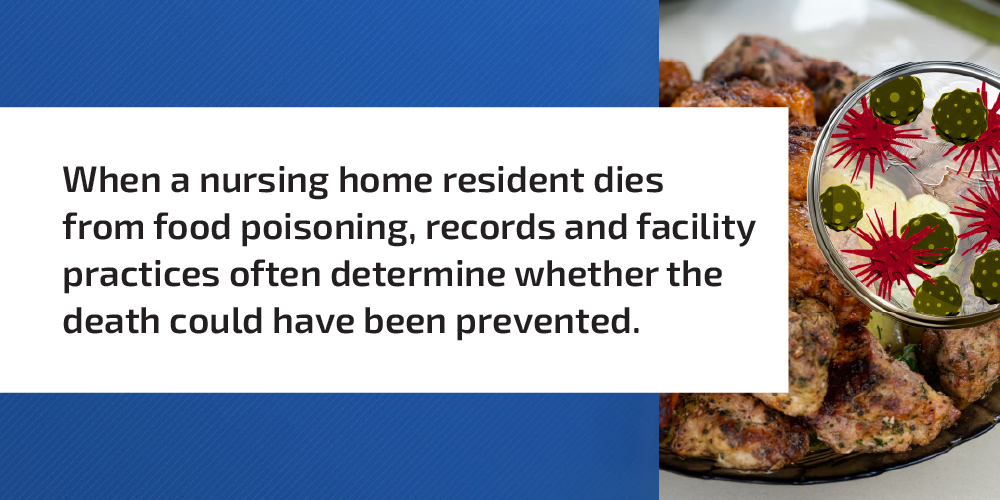
Key Evidence in a Nursing Home Food Poisoning Claim
In a fatal food poisoning case, proof matters because nursing homes often defend themselves by calling it “a sudden illness” or “something that could not be prevented.” A thorough investigation may prove otherwise, serving as the foundation for a claim.
Holding onto medical records is important in these claims. Hospital charts, lab work, stool tests, blood cultures, and imaging can show what infection the resident had and how severe it became. The autopsy report, if available, can confirm the cause of death and rule out other explanations. Even the medication list can matter, because it can show whether the resident faced higher risk and needed closer monitoring once symptoms began.
The nursing home’s own paperwork can fill in the gaps. Progress notes, vitals, and incident reports can show how quickly the facility responded. Meal plans, tray tickets, and dining logs can help identify what the resident ate. Kitchen records may show whether food was held at unsafe temperatures or stored incorrectly. Cleaning logs, staffing schedules, and training records can also matter. If the kitchen was short-staffed, if cleaning was skipped, or if basic safety steps were not followed, those details often show up somewhere in the facility’s documents.
State or county health departments can play a major role, too. If an outbreak is suspected, public health officials may investigate, interview staff, review kitchen practices, and collect testing data. Their findings can help identify the source of contamination and show whether the nursing home followed reporting rules and infection-control guidance.
Contact a Peoria County, IL Nursing Home Wrongful Death Attorney
If you believe a nursing home’s unsafe food practices contributed to your loved one’s death, you deserve clear answers. At Nursing Home Injury Center, we take these cases seriously because the stakes are as real as they come. Call our Peoria, IL nursing home neglect attorneys at 309-524-6900 to talk about what happened and what options may be available.
